

The care instructions we hand over with every job
Vehicle Wrap - Care & Maintenance
Everything you need to look after a vinyl wrap, paint protection film or boat wrap in Perth, written by the workshop that fitted it. Pick your film below and start with its first days.
Wrap care
Colour change, fleet and signage filmBoat wrap care
Hull wraps, graphics and marine filmStart here
Six rules that apply to every film we fit.
Vinyl wrap, paint protection film and marine film are different products, and each section below covers what makes them different. These six rules are the same for all of them, so they're stated once. Where a timing differs, your film's own section below is the one to follow.
-
01
Leave it alone at first
Nothing touches the film while the adhesive cures. How long that is depends on the film: your section below gives the days for a wrap, for PPF and for a boat, and what is allowed until the first check-up. Weather, humidity, temperature and sun all change how fast the adhesive cures, so longer is always better.
-
02
Hand wash every two weeks
Two buckets, a soft mitt, top down, and a rinse before you touch the panel so grit floats off instead of dragging. Weekly for work vehicles and for boats in use.
-
03
Use a pH-neutral shampoo
Nothing with wax, gloss enhancer, solvents or petroleum distillates. If the bottle quotes a pH, it should sit between 5 and 9.
-
04
Never use a brush car wash
Brushes drag grit across the film and catch every edge. A touchless wash is fine once your film's first-days rules below are behind you. Skip the hot wax option at the machine.
-
05
Clean droppings off the same day
Bird and bat droppings, tree sap, bugs and fuel etch film the longer they sit. Soak with warm soapy water first, and never scrub a dry spot.
-
06
Park in the shade when you can
Never wash a hot panel. Park under cover where possible. Roofs, bonnets and tray lids face the sun flat on and are always the first to age.
Section 1 of 3: colour change and fleet wraps
How to look after a vinyl wrap
This covers colour change wraps and commercial wraps alike. The cast films we fit from Avery Dennison, KPMF and 3M share the same rules, and their makers publish them. Here they are in plain English, with the Perth details added.
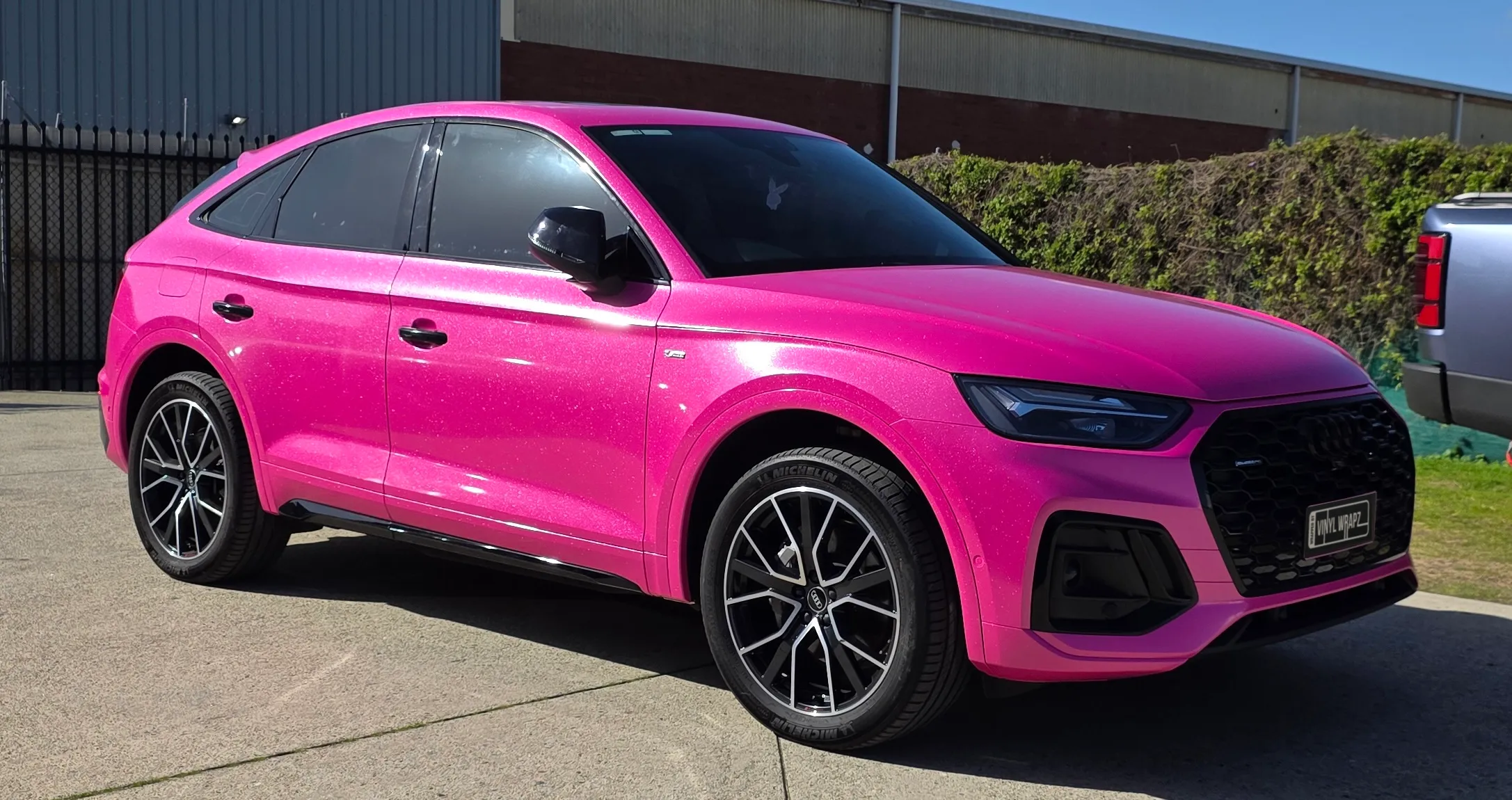
Your first fortnight
- For at least 72 hours, and ideally five to seven days, nothing touches the wrap. No wash, no waterless wash, no wax. Weather, humidity, temperature and sun exposure all change how fast the adhesive cures, so the longer you leave it the better. If it rains, it rains.
- After that, and until day 14: a gentle hand wash only if it needs one. No pressure washer, no car wash, no sealant yet.
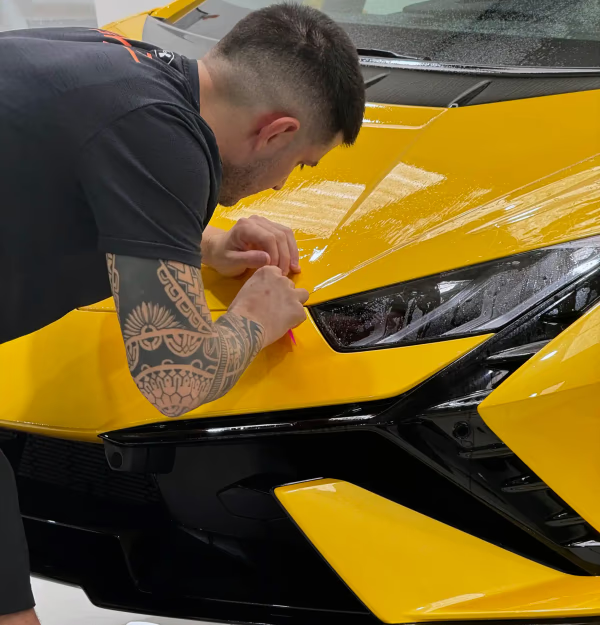
- If an edge or corner lifts, or a bubble appears, in the first two weeks, that's normal and it isn't yours to fix. Don't press, pierce or push it. Bring it in and we'll finish it off properly.
- Small bubbles under the film usually clear on their own in the first weeks as the air works out. The ones that don't, we sort at the check-up.
How to wash a wrapped car
- 01
Rinse first
Hose the whole car down with clean water before anything touches it. Loose grit is what scratches film, and a rinse floats it off.
- 02
Use two buckets
One with pH-neutral shampoo, one with clean rinse water. Dunk the mitt in the rinse bucket before it goes back into the soap.
- 03
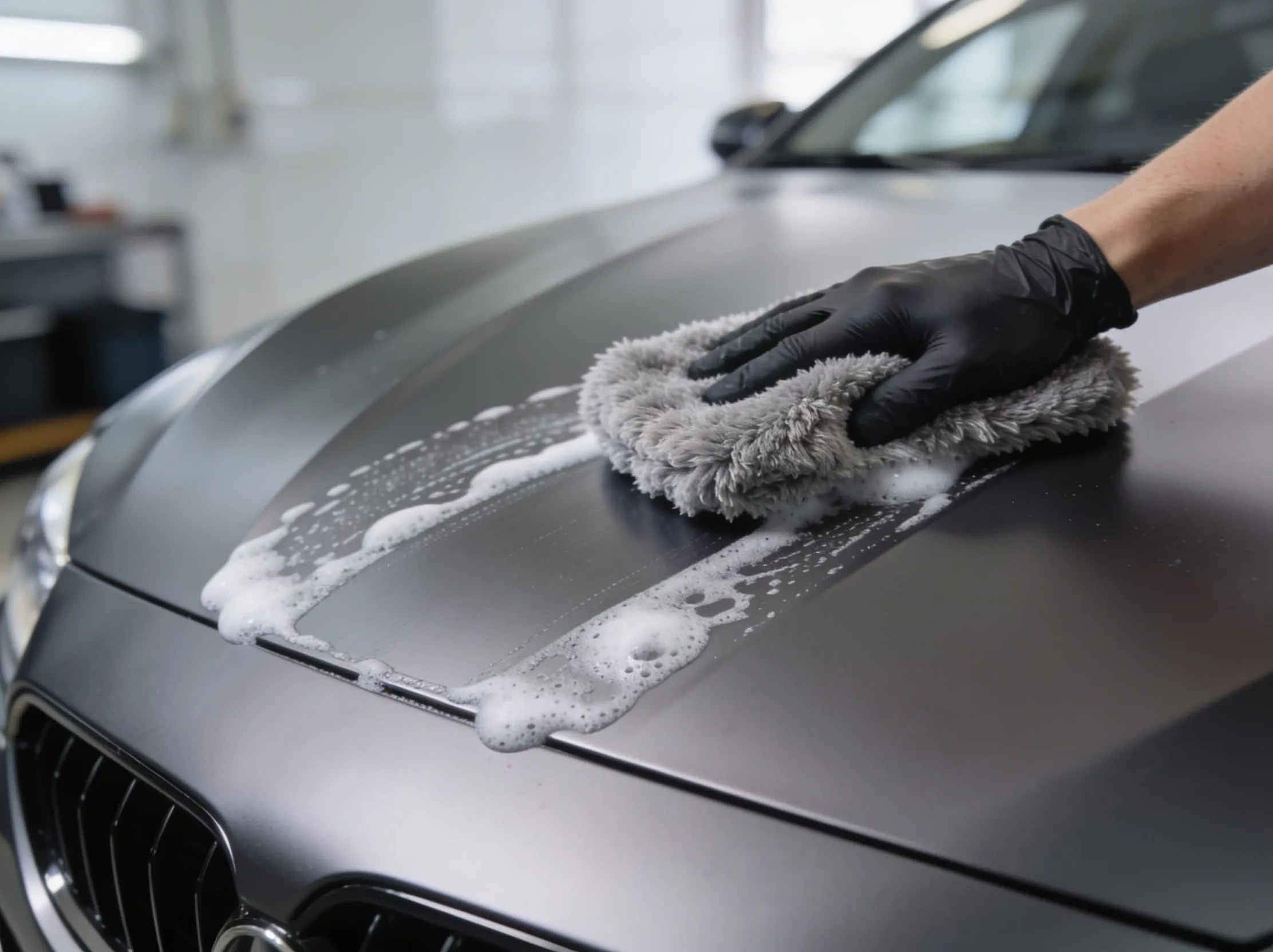
Wash top down with a soft mitt
A microfibre mitt or a soft sponge, light pressure, straight lines on gloss. Roof first, sills and rear last, because that's where the dirt is.
- 04
Rinse again
Rinse until the water runs clear, edges and seams included. Shampoo left to dry leaves marks.
- 05
Dry it in the shade
A silicone squeegee and then a clean microfibre towel, or let it dry out of the sun. Drying in the sun is how bore water spots a panel.
- 06
Dust between washes
A film-safe waterless wash and a clean microfibre handle light dust. Test any new product on a small hidden patch first.
Automatic car washes and pressure washers
-
Touchless washes are fine
After the first fortnight, a touchless automatic car wash is fine. It's spray only, so nothing touches the film. Skip the hot wax and sealant options at the machine.
-
Brush washes are out
The brushes drag grit across the face film and catch every edge and seam. This is the most common cause of the edge lift we repair.
-
Use a pressure washer with care
A pressure washer, or power washer, only when a hand wash hasn't shifted something. Under 1,200 psi (80 bar), water under 60 degrees, a 40-degree fan tip, at least 30 cm back and straight on. Never along an edge, seam or trim line.
Gloss, satin, matte and chrome each want something different
Most of the damage we see on satin and matte wraps comes from products made for gloss paint. Check the finish before you buy anything.
Gloss
WashThe standard routine.
ProtectA film-safe spray sealant, or a wax with no petroleum distillates. Light swirl marks soften out in warm sun.
AvoidCutting compounds, abrasive polish, buffing machines.
Satin and matte
WashThe standard routine, with a shampoo that has no wax or gloss enhancer.
ProtectA matte-specific sealant only. Never wax: it fills the texture and leaves shiny patches that don't come out.
AvoidWax, polish, silicone dressings, gloss quick detailers, wiping a dry panel.
Textured and carbon
WashAs for matte. Dirt sits in the texture, so allow a longer soak.
ProtectMatte-specific products, tested on a hidden patch first.
AvoidAnything that fills the texture: wax, silicone, coatings that add gloss.
Chrome
WashA soft microfibre or chamois only, one direction, no circles.
ProtectThe gloss products, applied lightly.
AvoidBrushes, grit of any kind, scrubbing. Chrome shows every mark.
Spot cleaning: the problems and the fix for each
- Bird and bat droppings
- Same day. Lay a warm wet cloth over the spot for a few minutes, then lift it off. If a shadow remains, a little isopropyl alcohol on a cloth, then rinse.
- Tree sap and gum
- Warm soapy water and patience. Soften, wipe, repeat. Never pick at it dry.
- Bugs
- Soak with warm soapy water. Bug and tar removers with petroleum distillates damage vinyl quickly, so leave them on the shelf.
- Fuel and diesel
- Wipe immediately, then wash the area. Fuel left to sit softens the adhesive and the print.
- Tar
- Soften with warm soapy water first. If it won't shift, bring it in rather than reaching for a solvent.
- Bore water spots
- Rinse with scheme water and dry straight away. Spots that have baked on need a film-safe cleaner and a gentle wipe.
- Fingerprints on matte
- A cloth dampened with about 70 per cent isopropyl alcohol and 30 per cent water, wiped and dried. Don't let alcohol sit on the film.
- Brown or rust-coloured patches
- Bring it in. This is the film itself breaking down and it doesn't reverse. That panel needs to come off and be rewrapped before the paint underneath suffers.
Sun, heat and where you park
UV exposure is the reason wraps in Perth age faster than the brochures suggest. A wrap that lives in a garage or carport will outlast an identical one that sits in the driveway all day, and the difference is measured in years. If you can't cover it, park in shade, and never wash or apply anything to a panel that's hot to the touch.
Roofs, bonnets and tray lids take the sun flat on and always go first. Check them once a season for dulling or chalking, and keep them cleaner than the sides. Gum trees drop sap, and the flying-fox roosts along the river drop worse. Park somewhere else if you have the choice.
Sealants and ceramic coatings on a wrap
A film-safe sealant, reapplied a few times a year, gives the face film a layer that dirt and droppings sit on instead of the film. The wrap manufacturers make them for their own films, and we use them in the workshop.
A ceramic coating over a gloss wrap works well and makes washing easier. It changes the look of matte and satin films, and some film makers exclude coated film from their warranty, so talk to us before you coat a wrap.
Work vehicles and fleets
A wrapped work vehicle is a moving sign, and a dirty one says the wrong thing about the business. Wash weekly. Delivery vans and utes that live in car parks pick up more contact damage than anything else. Mine-site and coastal vehicles need a fresh-water rinse at the end of the shift, because red dust and salt are abrasive once they dry.
Give drivers three rules on one card: no brush washes, no pressure lance at an edge, and fuel spills wiped before they drive off. Small lifts and scuffs are cheap to fix on a rotation and expensive once they've spread. If you run more than a handful of vehicles, talk to us about how often each one should come back for a look over.
How long a wrap lasts
Film makers rate premium cast wrap at up to seven or eight years on the sides of a vehicle in mild climates, and at about half that on horizontal panels. Perth isn't mild. Three to five years of looking freshly fitted is a fair expectation for a car that lives outside, and longer than that under cover. Colour matters too: dark gloss and matte films show ageing before light metallics do.
What shortens it is always the same list: brush washes, sun, droppings left to bake, and pressure washers at the edges. What extends it is the fortnightly wash and a roof over the car.
Bring it in if you see any of these
- An edge or corner lifting, anywhere
- Bubbles that appear after the first month, or that grow
- A scratch or gouge through to the paint
- A patch that has gone dull, chalky or brown
- Damage from a car park scrape or a car wash
Related pages
Also on this page
Section 2 of 3: gloss and matte paint protection film
How to look after paint protection film
PPF is a clear urethane film. It heals light marks with heat, it carries a long warranty, and the wrong wax can ruin a matte finish. We fit STEK, Avery Dennison, SunTek, LLumar and other major brands, and this section follows the care practices their manufacturers recommend.
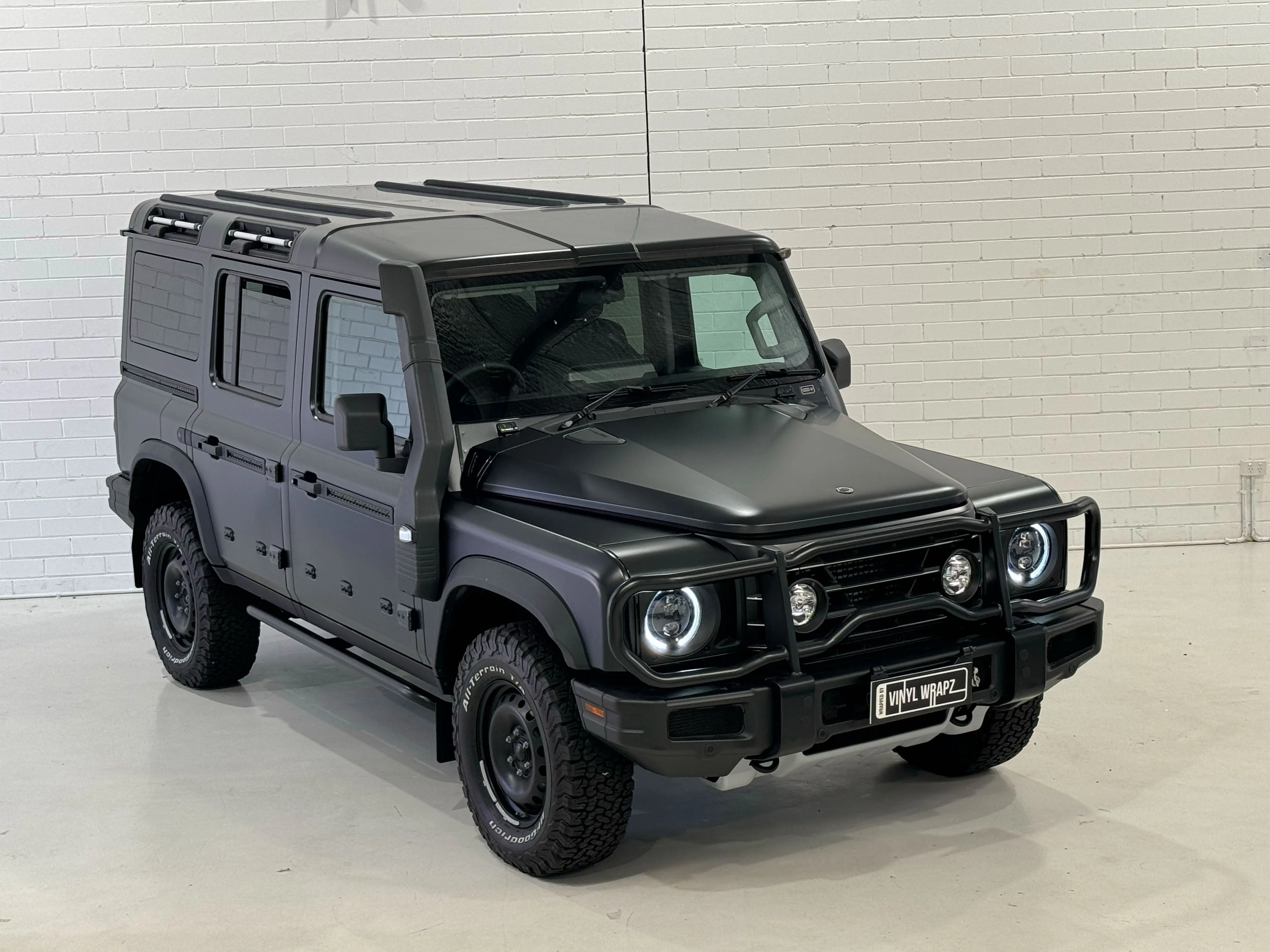
Your first week
- Do not wash the car for one full week. No hand wash, no touchless wash, nothing.
- Slight haze, small moisture pockets or a little lifting at an edge can show after the initial drying period. That is completely normal. Please don't try to fix any of it yourself; bring the car in and we'll finish it off properly.
- The slip solutions and other chemicals we use during installation take up to 30 days to fully cure, depending on the weather, the humidity and where the vehicle lives. No wax, sealant or coating until after your check-up.
Your free check-up, one to two weeks after pickup
Bring the car back one to two weeks after you collect it. We inspect every edge, corner and surface for air pockets, lifting or small imperfections, which can show after the initial drying period and are completely normal. Anything we find, we finish off there and then.
It's free and takes 15 to 30 minutes. Tell the staff member at pickup what time suits you and we'll book it in. Once the check-up is done the film is properly sealed and the car is ready for whatever you use it for, bush tracks included, and it will last a long time when it's looked after the way the steps below describe.
How to wash PPF
- 01
Rinse first
Hose the car down to float grit off before anything touches the film.
- 02
Use two buckets and a pH-neutral shampoo
No wash-and-wax shampoos. Wax build-up along the film edges is a nuisance to clean and dulls the finish.
- 03
Wash with a microfibre mitt and light pressure
Straight lines, top down. The top coat is tough, and it still scratches if you grind dirt into it.
- 04
Stay out of the sun
Wash early or in shade, and never on a hot panel. Soap dries into water spots on a warm surface within minutes.
- 05
Finish with clean water, then dry
Bore water leaves mineral spots, and matte PPF holds them in its texture. A clean-water rinse and a microfibre dry stops that.
- 06
Check the edges
After every wash, run your eye along the edges and around the badges and lights. An edge that has started to lift needs to be seen before it catches.
Automatic car washes and pressure washers
-
Touchless washes are fine
After the first week, a touchless automatic car wash is fine. No brushes touch the film. Skip the wax option at the machine.
-
Brush washes are out
Self-healing handles light marks. The brushes still scratch deeper than the top coat heals, and they work at the edges.
-
Use a pressure washer with care
Under 1,200 psi (80 bar), a wide fan, at least 30 cm back. Keep the lance well clear of the edges; the film makers say up to a metre. Never at an edge or seam.
Spot cleaning: the problems and the fix for each
- Bird droppings
- Same day. A warm wet cloth over the spot for a few minutes, lift, rinse. Droppings left in the sun etch the top coat.
- Bugs
- Soak and wipe. A bug remover made for coated paint is fine; anything with solvents or petroleum distillates isn't.
- Tree sap
- Warm soapy water, soften, wipe. If it has set hard, a little isopropyl alcohol on a cloth on STEK, SunTek and LLumar film. On Avery film keep to soapy water and call us.
- Tar
- The same ladder: warm soapy water, then a small amount of isopropyl alcohol, then us. No scrapers.
- Water spots
- Fresh spots wipe off with a damp microfibre. Baked-on mineral spots need a film-safe water spot remover, never a polish.
- Fuel
- Wipe straight away and wash the area. It won't hurt the film in seconds. It will if it sits.
- A yellow or cloudy patch
- Warm it in the sun first. If it doesn't clear in a day, bring it in.
Self-healing, and what it doesn't fix
The top coat is a urethane that softens with warmth and flows back level. Light swirl marks and wash marring disappear on their own on a sunny Perth driveway, usually within the hour. Warm water from the tap, around 45 to 50 degrees, speeds it up. That's the whole trick, and it works for the life of the film.
It doesn't fix stone chips, cuts or anything that has gone through the top coat. Those stay, and if one bothers you the answer is to replace that piece of film, which is exactly what PPF is for. Don't use a heat gun at home.
Wax, sealant and ceramic coating on PPF
You can, with the right product. No pigmented or dyed waxes, nothing abrasive, no rubbing compounds. A film-safe spray sealant keeps the surface slick and makes bugs and droppings easier to lift. A ceramic coating over PPF is common and works well: it adds chemical resistance and takes most of the water spotting problem away. On matte PPF use a matte-specific product or the finish will go shiny.
Keep wax and coatings off the film edges. A build-up along an edge is hard to clean and it's the first thing anyone notices on a car with PPF.
Edges, yellowing and the warranty
Modern films from STEK, Avery Dennison, SunTek and LLumar carry long manufacturer warranties against yellowing, cracking and bubbling. The film has to be looked after in the ways above for that to hold, and the warranty for your job is confirmed in writing when it's fitted.
The edges are where PPF lives or dies. Keep the pressure washer away from them, wipe wax off them, and if one lifts, come in before it catches on a mitt or in a car wash.
Once a year
Bring the car in once a year for a look over. We check the edges, the wrapped corners around the lights and mirrors, and any chips in the film, and we can polish or replace a piece before it becomes a job. It takes half an hour.
It's also a good excuse to catch up. We like hearing how the car is going and how life is travelling for the people who drive it.
Bring it in if you see any of these
- A lifted edge anywhere, especially around lights, mirrors and bumper corners
- A chip or cut through the film
- A yellow or cloudy patch that doesn't clear with warmth
- A scratch that hasn't healed after a week of sun
- Any damage from a car park or a car wash
Related pages
Also on this page
Section 3 of 3: hull wraps, graphics and marine film
How to look after a boat wrap
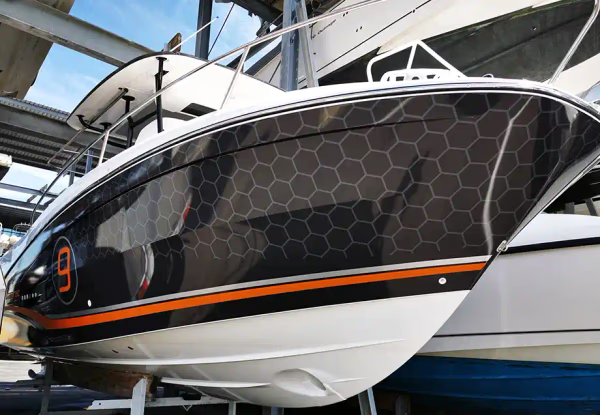
Salt, sun and rub points age a boat wrap faster than anything a car sees. Everything we fit sits above the waterline, on trailer boats, pen boats and commercial vessels, and this is what keeps it looking new. Marine film and hull protection film follow the same rules with one extra habit: the rinse.
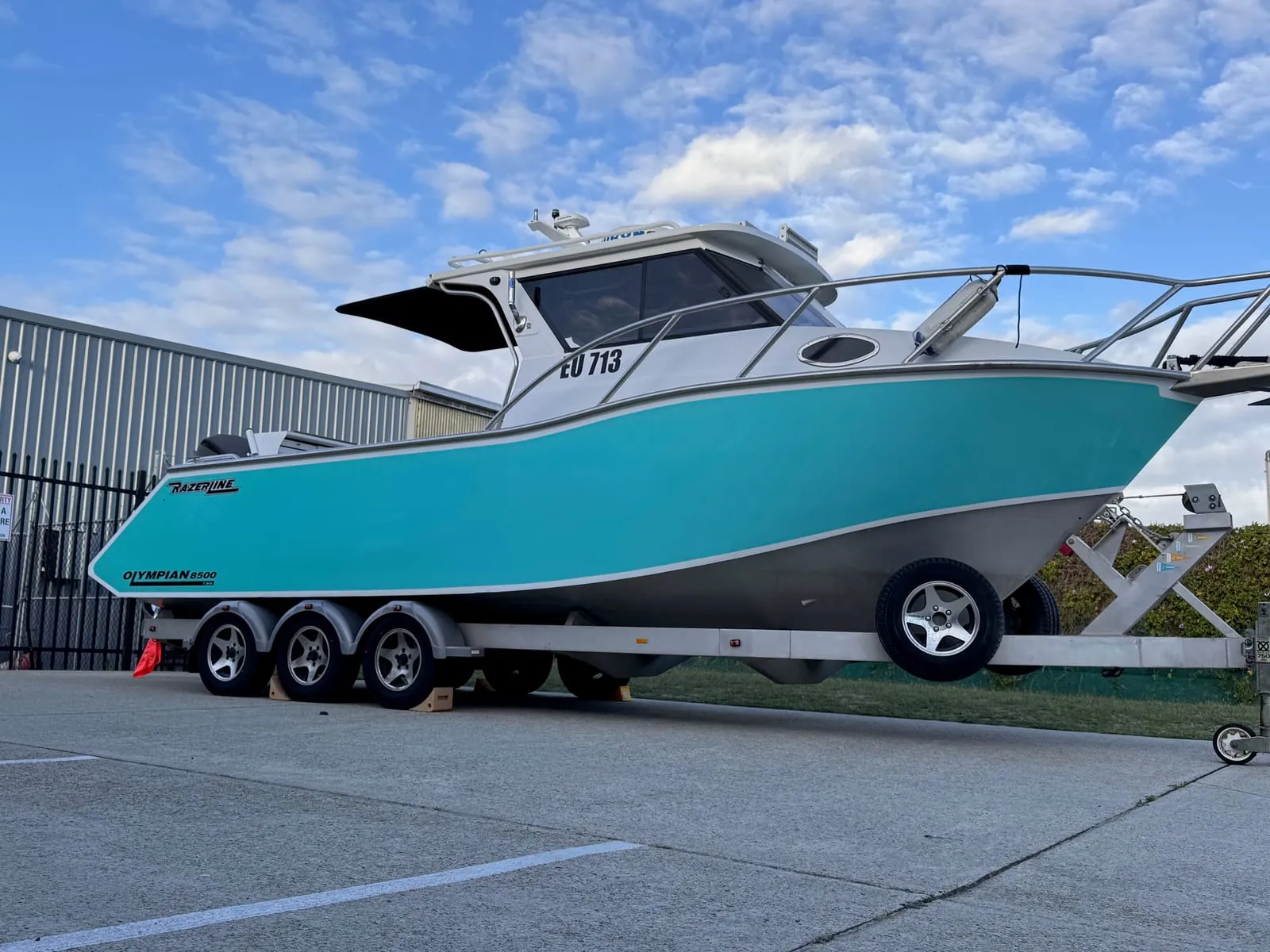
Before it goes back in the water
- A minimum of 72 hours out of the water and out of the weather, and ideally five to seven days. Weather, humidity, temperature and sun all change how fast the adhesive cures, so longer is better. If your job needs longer again, we'll tell you at handover.
- No covers strapped tight over the fresh wrap in that window, and no wash.
- First trip back: rinse it when you get home, the same as every trip after.
After every trip: the rinse
- 01
Rinse the day you come off the water
Fresh water over the whole wrap before the salt dries. Salt left to bake on film is the number one ager of a hull wrap in WA.
- 02
Do the edges and seams first
Salt collects along the rub rail, in the transom corners and around fittings. Rinse into them, not across them.
- 03
Rinse the trailer too
Rollers, skids and guide posts hold salt against the hull every time the boat sits on them.
- 04
Hose off fish blood, bait and berley straight away
They stain film if they dry. A hose and a soft cloth on the day is all it takes.
- 05
Let it dry in the shade if you can
A hot hull on a trailer at three in the afternoon is the worst place to leave salt water drying.
The proper wash, every two to four weeks in use
- 01
Wash it like a wrapped car, not like gelcoat
A pH-neutral or marine-safe soap, a soft mitt or a soft brush on a pole, top down. No cutting compounds, no steel wool, no acetone or thinners.
- 02
Give the waterline and transom the most attention
That's where growth, scum and fuel end up. Soak, wipe, rinse.
- 03
Rinse and dry
Rinse until it runs clear, then let it dry in the shade or towel the flat areas.
- 04
Look it over while you're there
Edges at the waterline, around hardware and along the rub rail. An edge that has started to lift is a five-minute fix now.
Pressure, growth and time in the water
-
Use a pressure washer with care
Under 1,200 psi, a wide fan, 30 cm back, straight on. Never along a seam, an edge, a hardware cut-out or the waterline edge of the wrap.
-
Shift growth while it's soft
Weed, slime and early barnacles come off with a soft brush and soapy water. Never a scraper, steel wool or solvent on film. Hardened growth, bring it in.
-
Don't leave it in the water for months
A wrapped hull isn't made to live in the water, and the film makers say so plainly. A pen boat that's rinsed and covered is fine. A hull left in for a season is not.
Spot cleaning: the problems and the fix for each
- Dried salt
- Rinse, then a wet cloth. Never wipe dry salt; it's abrasive.
- Fish blood, bait and berley
- Rinse and wipe on the day. Dried on, warm soapy water and patience.
- Weed and slime
- A soft brush and soapy water while it's soft. No scrapers.
- Fuel, oil and two-stroke
- Blot, wash with marine soap, rinse. Don't let fuel sit at the filler.
- Sunscreen
- It marks film and gelcoat alike. Soapy water the same day.
- Bird droppings
- The same as on a car: a warm wet cloth, lift, rinse.
- Scuffs, tears and knocks: fenders, rollers, fishing gear, logs
- Light scuffs on gloss film ease with warm sun. If the damage is more than a scuff, send us a photo and ask. Torn film usually stays where it is and the damage stays isolated, and the fix is often a couple of minutes: a trim around the tear or a small patch. It isn't panic mode.
Rub points: fenders, lines, rollers and straps
Things rubbing the hull wear a boat wrap faster than the water does: fenders with grit on them, mooring lines, dock wheels, trailer rollers and guide posts, tie-down straps and buckles. Grit on a fender is sandpaper on a wrap.
Fender socks or covers, fleece over dock wheels, padding on the trailer's contact points, and straps that bear on the rub rail rather than on the film all cost little and add years. Check the rollers and skids for salt and grit before the boat goes back on the trailer.
Sun, heat and storage
Never wash a hot hull on the trailer; move it to shade or do it early. A cover earns its money. A boat that lives under cover or in dry storage keeps its wrap years longer than one baking in a pen all summer. On the trailer between trips, under cover. In the pen, a boat cover or shade cloth if you can manage it.
The waterline and antifoul
Our wraps finish above the waterline. Keep antifoul work off the film: mask the wrap edge before antifoul is applied and never sand towards the film. If your boat is being antifouled, tell the yard there's film above the line.
How long a boat wrap lasts
Shorter than the same film on a car, and the range is wide. Salt, sun and how the boat is stored decide it more than the film does. A trailer boat that's rinsed after every trip and kept under cover sits at the long end. A hull left in a pen all summer sits at the short end. We'll tell you what to expect for your boat and how it's kept, and marine film warranties are confirmed in writing with the job.
Hull protection film
Clear marine film follows the PPF rules above for washing, self-healing and products, with the rinse-after-every-trip habit on top. Salt is the extra enemy and the answer is the same: fresh water the day you come in.
Bring it in if you see any of these
- An edge lifting at the waterline or around a fitting
- Growth or salt that has got under an edge
- A gouge through to the gelcoat or the aluminium
- A patch that has faded or gone chalky
- Rub-through at a fender, a roller or a strap
Related pages
Also on this page
Products
Products worth knowing
A few products made for film do the whole job. What matters is that they were made for film, or for coated paint, and never for cutting paint back. We keep several of these in the workshop, some go home with you at pickup, and the rest we can sell you or point you to. Ask the staff member.
01
For vinyl wraps
Avery Dennison makes a Supreme Wrap Care range for its own films: a cleaner, a power cleaner for spots, and a sealant. It's what we've pointed wrap owners to for years, and it sets the benchmark for anything else you buy: water based, film safe, no petroleum distillates. On matte film, always test it on a small patch first, because some cleaners can streak a matte face. A ceramic coating for a gloss wrap is available through the workshop too.
- A pH-neutral car shampoo with no wax: always safe
- A film-safe waterless wash for light dust
- A hybrid ceramic detailer: safe on most films, confirm with us for yours
- A matte-specific sealant for satin and matte
- Soft detailing brushes for badges, grilles and edges
- Isopropyl alcohol, diluted, for fingerprints and stubborn spots
02
For paint protection film
Use products made for coated paint or for PPF itself. A pH-neutral shampoo, a spray sealant without dyes or abrasives, and a water spot remover cover it. A ceramic coating is the upgrade if you want the easiest possible washing, and we can do it in the workshop.
- A pH-neutral shampoo: always safe
- A hybrid ceramic detailer: safe on most films, confirm with us for yours
- A spray sealant with no dyes, pigments or abrasives
- A film-safe water spot remover
- A matte-specific product for matte PPF
- A ceramic coating over the film, applied in the workshop
03
For boats
A marine-safe pH-neutral wash, a soft brush on a pole, fresh water at the ramp or at home, and covers for the fenders. Nothing with cutting compound in it, and nothing with acetone.
- A marine-safe pH-neutral wash
- A soft brush on a pole and a soft mitt
- Fender socks or covers
- A boat cover for the trailer or the pen
If a product isn't listed here and you want to use it, test it somewhere hidden first. If in doubt, send us a photo of the bottle and we'll tell you.
When to come back
When to bring it back to us
Small problems on film are quick to fix and big ones aren't. If you see any of these, don't try to fix it yourself, and don't wait. If it's physical damage, send us a photo first: torn film usually stays where it is, and most of it is a quick trim or a patch.
- An edge or corner lifting, on any film
- Bubbles that appear or grow after the first month
- A scratch, chip or gouge through the film
- A patch that has dulled, yellowed, chalked or gone brown
- Damage from a car wash, a car park, a fender or a trailer roller
Thinking about taking a wrap off?
Don't pull at it. On a properly fitted wrap the mirrors, handles, badges and trims were removed and refitted over the film, so the film runs underneath them, and a proper removal is the installation in reverse. Call us first.
A full guide to wrap removal is coming soon.
FAQ
Questions owners ask us
The questions we get at handover and on the phone, answered properly. Grouped by film.
Wrap care
How often should I wash a wrapped car?
Every two weeks, and weekly for a work vehicle. Film behaves like paint: dirt, droppings and salt that sit on it etch it, and the same things washed off do no harm. A fortnightly hand wash with a pH-neutral shampoo is the single habit that decides whether a wrap still looks new at year three. In between, a film-safe waterless wash handles light dust.
Can a wrapped car go through a car wash?
A touchless one, yes, after the first fortnight. A brush wash, no. The brushes drag grit across the film and catch at every edge and seam, which is how most of the edge lift we repair starts. If you use a touchless wash, skip the wax and sealant options at the machine, because many of them contain petroleum distillates that soften vinyl.
How long after wrapping can I wash the car?
Leave it completely alone for at least 72 hours, and ideally five to seven days, then hand wash only for the rest of the first fortnight. The adhesive keeps building its bond to the paint for days after we hand the car back, and weather, humidity, temperature and sun all change how long that takes. Water pressure or chemicals in that window are what lift an edge. After two weeks the normal routine applies.
Can I pressure wash a vinyl wrap?
Yes, carefully, and only when a hand wash hasn't shifted something. Keep the pressure under 1,200 psi, the water under 60 degrees, use a 40-degree fan tip, stay at least 30 cm back and hold the lance straight on to the panel. Never aim along an edge, a seam or a trim line. Those figures are the film makers' own, and edges are where wraps fail.
Can I wax or ceramic coat my wrap?
On a gloss wrap, yes: a film-safe spray sealant or a wax with no petroleum distillates, and a ceramic coating works well. On satin, matte or textured film, no wax of any kind, because it fills the texture and leaves shiny patches that don't come out; use a matte-specific sealant instead. Some film makers exclude coated film from their warranty, so talk to us before coating.
How do I get bird droppings or tree sap off without damaging the wrap?
Soften first, then lift. Lay a warm wet cloth over the spot for a few minutes, wipe it away and rinse. If a shadow remains, a little isopropyl alcohol on a cloth, then rinse again. Never scrub or pick at a dry spot, and leave the bug and tar removers on the shelf, because most contain petroleum distillates that damage vinyl quickly. The sooner you get to it, the easier it is.
How do I look after a matte wrap?
Wash it the same way, with a shampoo that has no wax or gloss enhancer, and never apply wax, polish or silicone dressing. Fingerprints and marks come off with a cloth dampened in a mix of roughly 70 per cent isopropyl alcohol and 30 per cent water. Don't wipe a dry matte panel, and don't let alcohol sit on it. A matte-specific sealant protects it without adding shine.
How long does a vinyl wrap last in Perth?
Three to five years of looking freshly fitted is a fair expectation for a car that lives outside, and longer under cover. Film makers rate premium cast wrap at up to seven or eight years on vertical panels in mild climates and about half that on roofs and bonnets, and Perth sun sits at the harsh end of their charts. Brush washes, droppings left to bake and pressure washers at the edges shorten it. The fortnightly wash and a roof over the car extend it.
PPF care
Does PPF need maintenance?
Less than paint, and not none. Hand wash it every fortnight with a pH-neutral shampoo, keep droppings and bugs from baking on, and keep wax and pressure washers away from the edges. Self-healing looks after light marks by itself. A film-safe sealant or a ceramic coating makes washing easier still. That's the whole routine.
How long after PPF is fitted can I wash the car?
Not for one full week, and no wax, sealant or coating until after your free check-up at one to two weeks. The adhesive is still curing to the paint in that window, and the installation chemicals take up to 30 days to cure fully depending on weather and humidity. A little haze, a few small moisture pockets or a slightly proud edge in the first days are normal. Don't try to fix them; we do that at the check-up.
How does self-healing work, and what won't it fix?
The top coat is a urethane that softens with warmth and flows back level, so light swirl marks and wash marring disappear on a sunny driveway, usually within the hour. Warm tap water, around 45 to 50 degrees, speeds it up. It doesn't fix stone chips, cuts or anything through the top coat. Those stay, and the fix is to replace that piece of film, which is what the film is there for.
Can I wax or ceramic coat over PPF?
Yes. Use waxes and sealants with no dyes, pigments or abrasives, and no rubbing compounds. A ceramic coating over PPF is common and works well. On matte PPF use a matte-specific product or the finish goes shiny. Keep everything off the film edges, where build-up is hard to clean.
Can PPF go through a car wash?
A touchless wash, yes, after the first week. Brush washes still scratch deeper than the top coat heals and they work at the edges, so avoid them. Skip the wax option at the machine.
Will PPF yellow in Perth sun?
The films we fit, from STEK, Avery Dennison, SunTek and LLumar, carry manufacturer warranties against yellowing, cracking and bubbling, and they're built for UV. Older PVC-based films yellowed; modern urethane films don't in normal use. What does discolour film is contamination left to bake on, so the same-day clean-up rule matters more here than anywhere.
How do I remove bird droppings or sap from PPF?
Soak with a warm wet cloth for a few minutes, lift, rinse. For set sap or tar on STEK, SunTek or LLumar film, a small amount of isopropyl alcohol on a cloth is fine. On Avery film keep to warm soapy water and call us if it won't shift. Never scrape or polish the film.
How long does PPF last?
The films we fit are made and warranted for the long term, and the written warranty for your job sets out the years. Perth UV and the horizontal panels work hardest against it; shade, a coating and the fortnightly wash work for it. When a piece is damaged it's replaced on its own, so the rest of the car keeps going.
Boat wrap care
How often should I rinse my wrapped boat?
Every time it comes out of salt water, the same day. Salt left to dry and bake on film is the fastest way to age a hull wrap in WA. A hose over the whole wrap, into the edges and seams and over the trailer rollers, takes five minutes and adds years. A proper wash every two to four weeks in use does the rest.
Does salt water damage a boat wrap?
Salt that's rinsed off does no harm. Salt that dries and bakes on the film crystallises along the edges and seams and slowly breaks the film down, which is why the rinse habit is the whole game. The films we fit on hulls are rated for marine use above the waterline. They're not made to live submerged for months.
Can I pressure wash a wrapped boat?
Yes, with the same limits as a car: under 1,200 psi, a wide fan, at least 30 cm back and straight on. Never along a seam, an edge, a hardware cut-out or the waterline edge of the wrap. For weed and slime near the waterline, a soft brush and soapy water beats pressure every time.
Can I keep a wrapped boat in the water?
For a trip or a weekend, yes. As a permanent mooring, no. The film makers say plainly that vinyl isn't designed to be permanently submerged, fresh or salt. A pen boat that's rinsed, covered and lifted out now and then is fine. A hull that sits in the water for months will lift at the waterline.
How do I get weed, slime or barnacles off the wrap?
While they're soft, a soft brush and soapy water. Early barnacles lift with soaking, a soft brush and patience. If they've had time to harden, bring it in before you damage the film. Never metal scrapers, steel wool or solvent on a wrapped hull.
What about fuel, bait and fish blood on the wrap?
Blot fuel and oil straight away and wash the area with marine soap. Fish blood, bait and berley stain film if they dry, so hose them off on the day and wipe with a soft cloth. Sunscreen marks film too, and it comes off with soapy water the same day.
How soon after wrapping can the boat go back in the water?
A minimum of 72 hours out of the water and out of the weather, and ideally five to seven days. Weather, humidity, temperature and sun all change how fast the adhesive reaches full bond, so longer is better. If your job needs longer again, we'll tell you at handover. No tight covers or straps over the fresh wrap in that window.
How long does a boat wrap last in Perth?
Shorter than the same film on a car, and the range is wide. A trailer boat that's rinsed after every trip and kept under cover sits at the long end. A hull left in a pen all summer sits at the short end. Salt, sun and storage decide it more than the film does. We'll give you an expectation for your boat and how it's kept, and the film warranty is confirmed in writing with the job.